
Hochreiter Biergarten is what happens when you stop trying to preserve beer garden culture and just let it exist. Established in 1970 in the center of the Viktualienmarkt, it’s not a themed recreation or a venue playing dress-up for tourists. It’s a working marketplace with a beer garden in the middle, operating the way beer gardens have operated in Munich for over a century.
The physical setup makes this obvious. You’re sitting on classic wooden beer benches under chestnut trees that are now 50 years old. The maypole from the Viktualienmarkt rises in the center. Around you, the market itself continues operating. Vendors sell produce, meat, fish, and prepared foods. People come for lunch on weekdays. Saturday fills with locals and tourists in equal measure. It’s not a destination you travel to. It’s a place you end up because you came to the market.
The Rotating Brewery System
Here’s what makes Hochreiter genuinely different: it’s not a single-brewery beer garden. Every six weeks, a different major Munich brewery has the tap. Paulaner, Augustiner, Löwenbräu, Spaten, Hacker-Pschorr, Hofbräu, Andechser, and others rotate through. This means you come back multiple times a year and taste different beers in the same spot, following the actual brewing calendar of Munich.
This is serious beer culture, not beer tourism. The breweries that rotate are the same ones that have defined Munich for centuries. The point isn’t the experience. The point is the beer.
The Food and Service
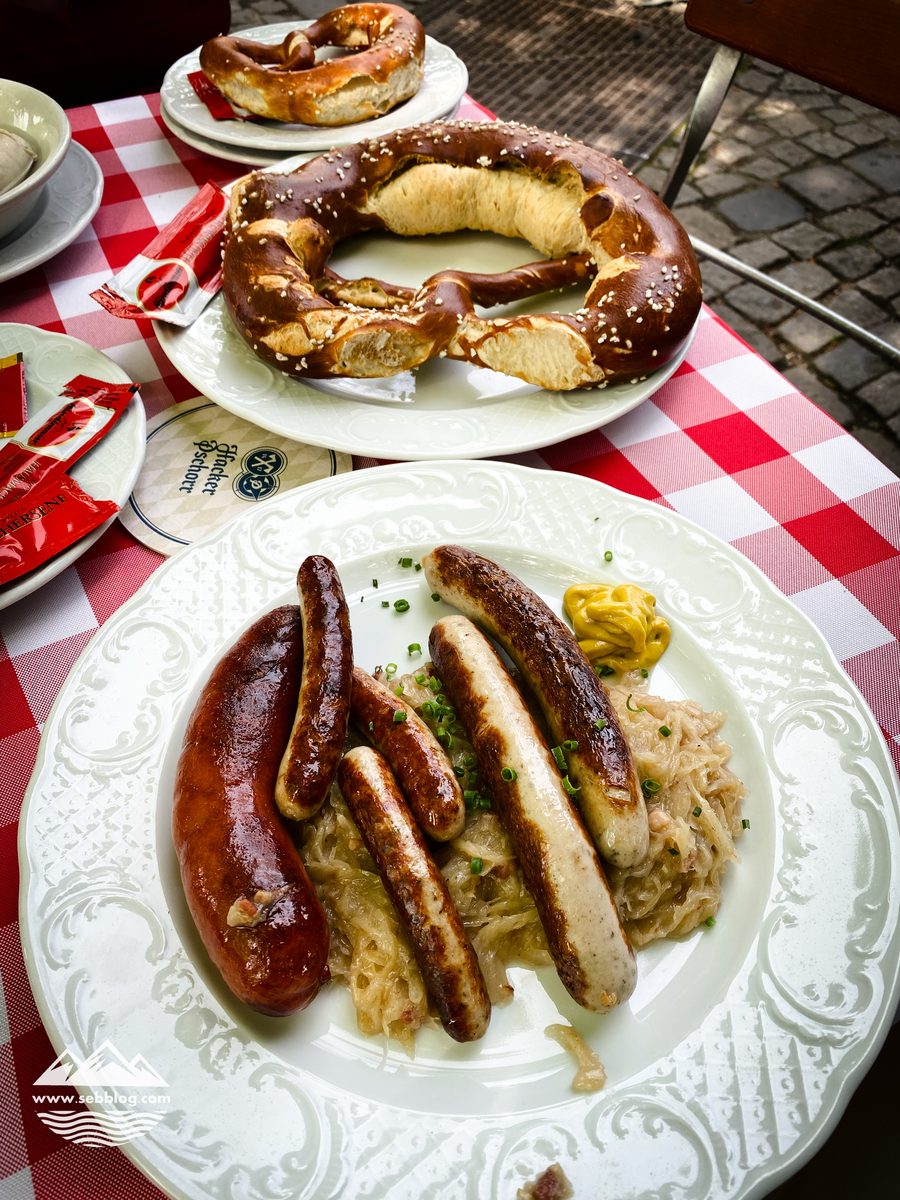
Hochreiter has waitstaff who bring beer and food directly to your table. You sit at communal benches, order from your waiter, and they handle delivery. The beer rotates every six weeks—Paulaner, Augustiner, Löwenbräu, Spaten, Hacker-Pschorr, Hofbräu rotating through on six-week cycles. The kitchen serves classic Bavarian fare: roasted pork with potato dumplings and sauerkraut, schnitzel, Leberkäs with egg and potato salad, soups like liver dumpling and goulash soup, and the Hochreiter specialty—a half roasted pork hock (Schweinshaxe). Everything comes with sides, salads, or bread as part of the order.
The pretzels (both regular and chocolate-covered) are classic beer garden tradition. Salt and hops, or dark bread and chocolate. No overthinking it.
Why This Matters
Most of the restaurants I’ve written about are working within tradition. Hochreiter doesn’t work within tradition. It IS tradition. It’s not trying to be authentic. It existed through the post-war years, through Munich’s economic transformation, through the rise of tourism and the Instagram era. It kept operating the same way because there’s no reason to change what actually works.
The beer garden attracts both locals and tourists, with a mix of office workers, tourists, and even Munich residents in traditional costume. But those groups aren’t separated. They sit at the same wooden tables, order from the same waiter, drink from the same rotating breweries.
Seating is communal, 1,100 seats on long benches shared with strangers. The noise level is actually high. Staff brings your beer and food directly to your table. It’s straightforward and efficient—no theater, no fuss, just beer and people and a market operating exactly as it has for decades.
The Practical Side
Come on a warm day when the chestnut trees actually provide shade. Saturday is busiest. Lunchtime is genuinely busy with office workers grabbing quick meals. The atmosphere changes by the hour depending on who’s there and what time of day it is. There’s no “best time” because it’s always authentic to whatever moment you arrive in.
Bring cash. Arrive hungry because you’ll want to explore the market for food. If you speak German and engage with vendors, you’ll get better service and better food. But none of this is required. Even English-speaking tourists end up having a good time here simply because the setting is doing all the work.
Check which brewery is on tap before you go if you have strong preferences, since the rotation happens every six weeks. Otherwise, drink whatever is being poured. That’s the whole point of the system.