Hofbräuhaus is the kind of place that makes you understand why people write cynical reviews online. It’s packed with tourists. The noise level is genuinely punishing. You’ll wait longer than seems reasonable. And yet, sitting in that cavernous beer hall with a proper Schweinshaxe in front of you and a stein of Helles at your elbow, you understand why Hofbräuhaus, established in 1589, has endured for 437 years.
Let’s be honest about what Hofbräuhaus is: it’s the most famous beer hall in Bavaria, which means it’s treated like a monument by the international travel circuit. The main hall (Schwemme and beer garden) accommodates up to 1,500 guests according to their official site, with additional capacity in upstairs rooms. You’ll see coordinated groups in matching shirts, people taking selfies, the soundtrack of a dozen languages mixing with live accordion. It attracts both tourists and locals, though it’s primarily known as a tourist destination.
But here’s what matters: the food is genuinely good, the beer is excellent, and the atmosphere, for all its chaos, captures something real about Bavarian social culture. Large wooden communal tables, strangers singing together, the kind of energy that makes sense when you’re among a thousand people determined to have a good time.
The Schweinshaxe is Still the Point
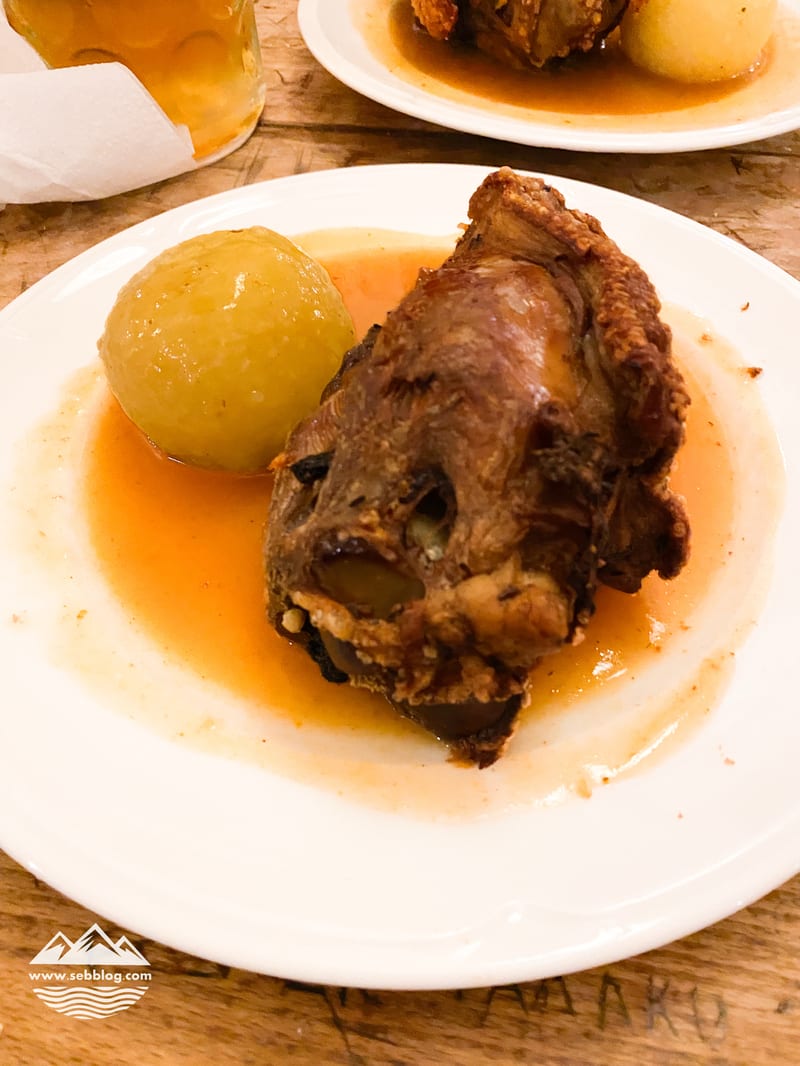
The pork knuckle here is what everyone comes for, and there’s a reason. It arrives bronzed and substantial, the skin properly crisp, the meat underneath tender enough to separate with gentle pressure from a fork. The gravy that pools around it is rich and confident, and the boiled potato alongside serves as the perfect textural counterpoint. This is not innovative cooking. It’s cooking that understands its own purpose absolutely.
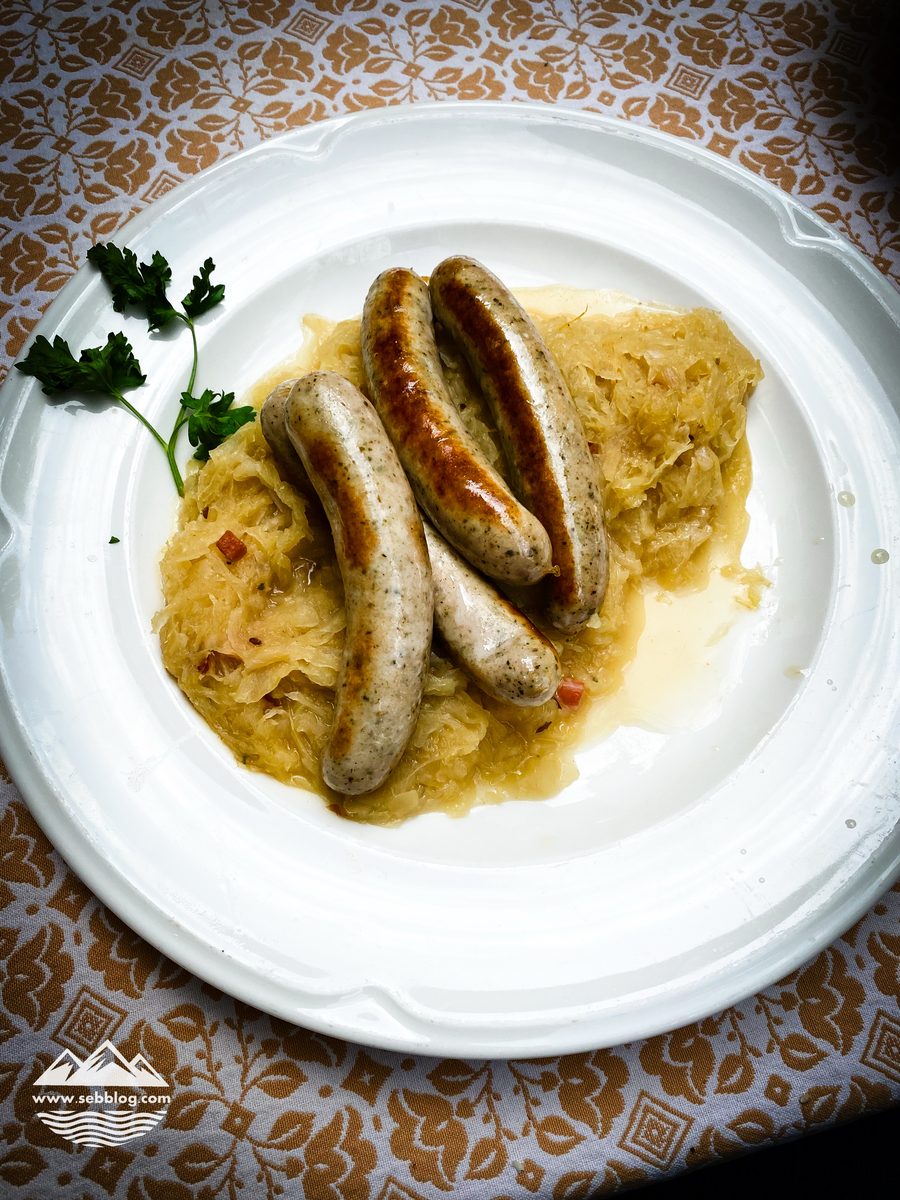
The Schweinswürstl (Bavarian sausages) are straightforward quality. Three varieties on the plate, nestled into a creamy, slightly sharp sauce (the Bavarian mustard base comes through clearly), with fresh parsley as garnish. The sausages have that snappy casing and seasoned interior that tells you the kitchen takes its work seriously, tourist volume notwithstanding.
The Pretzel and Beer Partnership
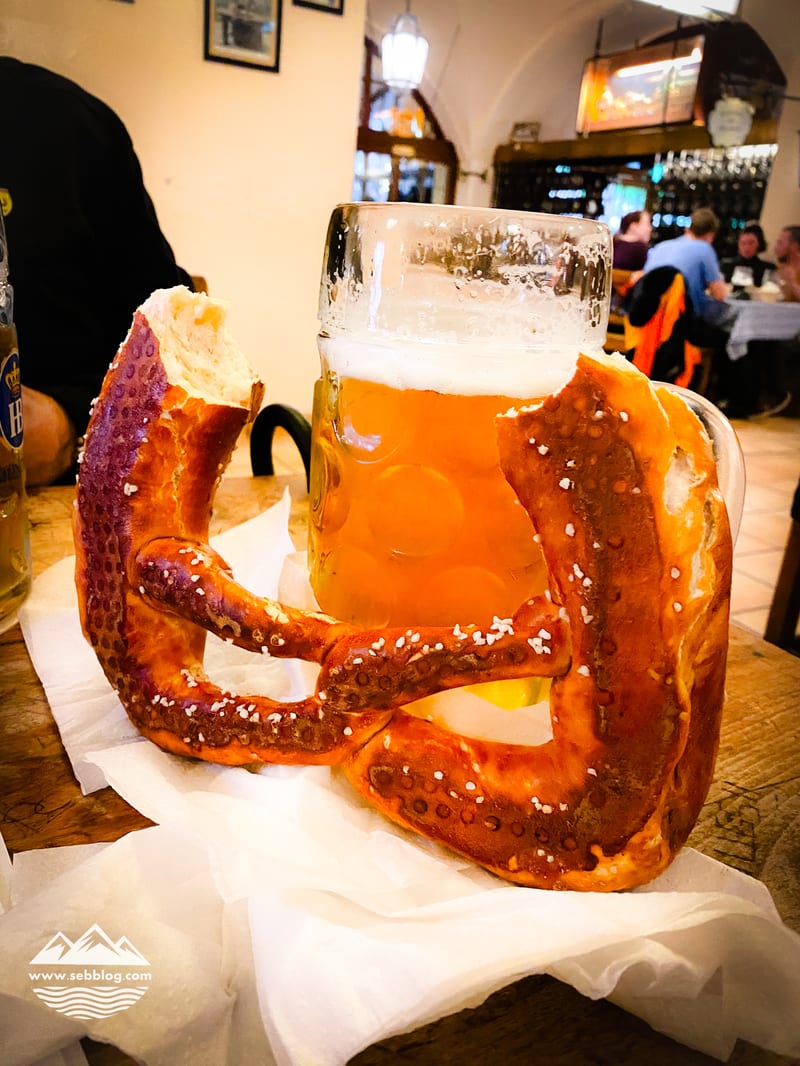
The oversized pretzel with a cold stein of Helles is a pairing so obvious and so effective that it feels strange to write about. But eat one here, in that specific hall with its painted ceiling and its roaring crowd, and you understand what this building is actually preserving. The pretzel is soft inside, properly salted on the outside, and pairs with the crisp, pale lager in a way that feels almost ceremonial.
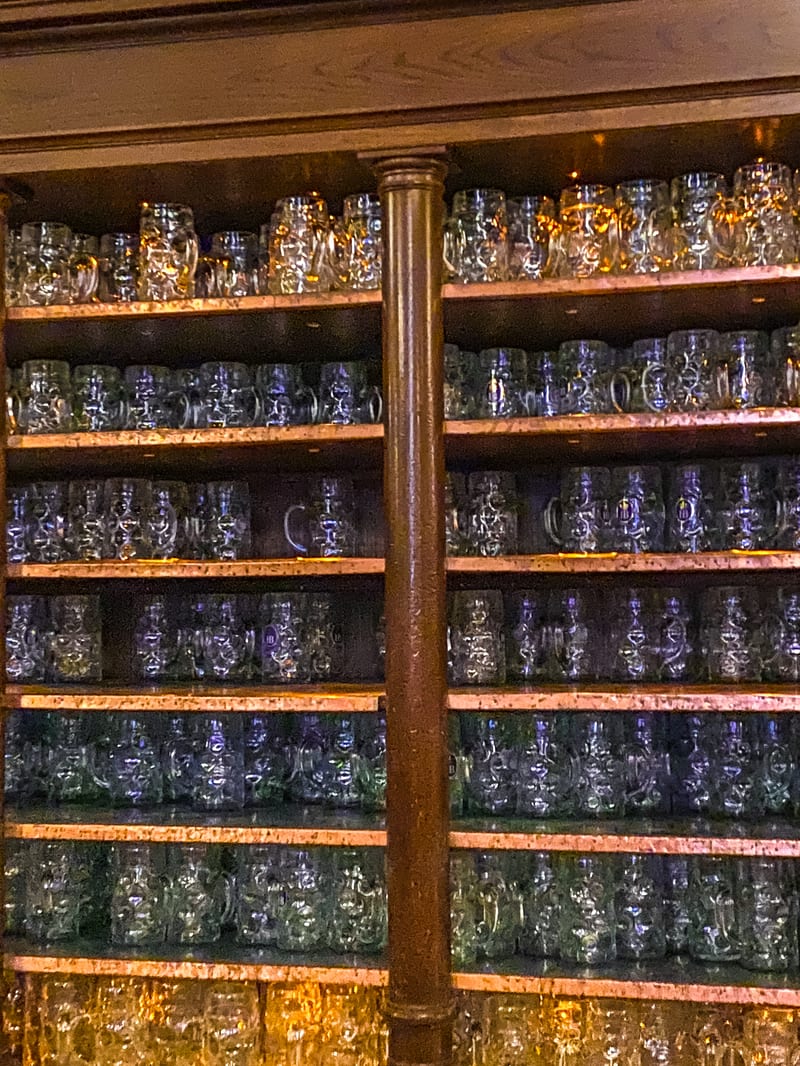
Hofbräu beer is brewed according to the Bavarian Beer Purity Law of 1516, meaning only natural ingredients go into production. You can taste that commitment. The beer is clean, approachable, and what you’d drink if you wanted to drink beer like someone who grew up here.
The Caveats Matter
Service can be inconsistent. During peak hours, the staff seem to move through the hall with the choreography of exhausted professionals. You’re not being rude if you make direct eye contact and gesture firmly. The noise is real enough that conversation becomes performance art. If you’re hoping for quiet or intimate, this isn’t your place.
Expect to share your table with strangers. This is by design. The communal seating is central to the whole experience. If you genuinely can’t handle that, there are smaller Hofbräu locations, but they’re different animals.
Booking in advance is wise if you’re a group of four or more. Walk-ins get seated when space opens, which can mean waiting an hour during summer or after Oktoberfest.
Why It Endures
Hofbräuhaus works because it’s honest about what it is. It doesn’t pretend to be a hidden local gem. It’s not trying to be “undiscovered.” It’s a working beer hall that also happens to be a major tourist destination, and it manages that balance without pretension. The kitchen still makes everything fresh and from scratch, including the bread. The beer is brewed by Hofbräu at their production facility in Riem and served fresh. The traditions are maintained not as museum pieces but as the actual way they do business.
You’ll share that beer hall with tourists from every corner of the world, which means you’re experiencing something genuinely international while eating food that’s purely regional. That’s its own kind of magic, even if it’s loud and crowded and exactly what you expected.