
Rischart is not a destination. It’s what you eat when you’re actually living in Munich, not just visiting. You don’t come to Munich to go to Rischart. You come to Munich for beer halls and schnitzel and churches, and then at 7:30am on a Tuesday, you’re grabbing a coffee and a sandwich from Rischart on your way to somewhere else because they’re actually open and the quality is consistently solid.
That’s not criticism. That’s exactly why it matters.
The chain appears across Munich with the kind of ubiquity that suggests genuine usefulness rather than corporate saturation. Multiple locations in the city center. High-traffic areas like Marienplatz. The Viktualienmarkt. U-Bahn stations. Neighborhood corners. Shopping districts. This is what breakfast and lunch actually look like for Münchners who work office jobs, have appointments between commitments, or need to eat something properly without overthinking it.
The Quality That Doesn’t Announce Itself
Rischart gets the fundamentals right in ways that feel almost invisible because they never break. The breads are fresh daily. The fillings are straightforward and properly portioned. The pastries actually contain butter. Coffee is genuinely competent. This isn’t fancy. It’s not trying to tell you a story or position itself as artisanal. It’s just consistent execution of reliable food.
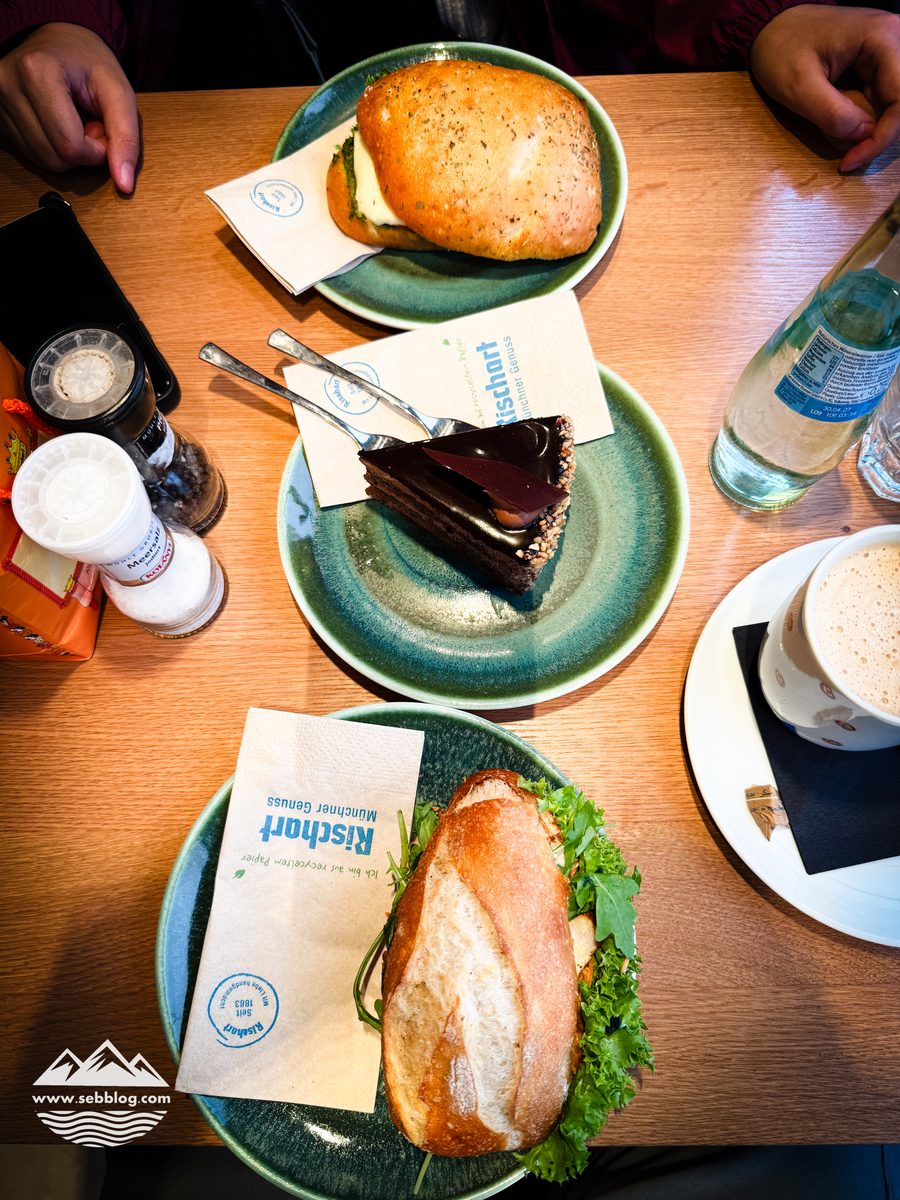
The sandwich in your photo is instructive. Seeded roll that has actual texture and flavor, not bland carrier material. Proper lettuce. Sliced ingredients that demonstrate someone built it with attention. The croissant shows actual lamination and butter development. The dark chocolate cake has structural integrity and genuine cocoa depth, not that hollow sweetness of industrial confections.
You’ll find croissants, pretzels, sandwiches built to order or ready to grab, salads, a genuine selection of cakes and pastries that changes seasonally. The coffee isn’t trying to impress but it’s actually fine. Some locations have café seating with views. Others are quick-service counters. The quality doesn’t meaningfully differ.
Why This Model Actually Works
Rischart’s proliferation isn’t random expansion. They solved a real problem: what do you eat when you have 20 minutes between commitments and don’t want to spend 15 of those minutes deciding? You go to Rischart knowing exactly what you’re getting and trusting that the quality is consistent across every location.
This is deliberate opposite of tourist-focused. No Instagram narrative. No heritage storytelling. No craft positioning. Just a bakery that understood consistency and accessibility matter more than distinctiveness. The famous location at Marienplatz has a rooftop terrace with church views, but that’s almost incidental to the actual purpose: solid breakfast before you spend three hours walking around town.
The real logic shows in locations like the Viktualienmarkt branch, where you grab coffee and a pastry before settling into the market area, or the U-Bahn stations where you catch transit with a croissant. That’s not novelty. That’s how the city actually functions for people who live there.
The Honest Assessment
Rischart will never be what you tell people to experience in Munich. It’s not a memory-maker. It’s not the story you tell about that incredible bakery you discovered. It’s the place you go three times a week without really thinking about it because the coffee is good, the pastries are fresh, and you know exactly what you’re getting.
Some locations are genuinely pleasant to sit in. Others are pure grab-and-go. Both are useful. The quality of the food itself doesn’t shift between them. This is reliability in service of actual living, not tourism.
For breakfast before exploring, quick lunch between activities, coffee while waiting, a croissant on a train somewhere, a sandwich when you’re in an unfamiliar neighborhood and hungry, a mid-afternoon cake break during shopping, post-beer-hall late-night carbs: Rischart is the answer. Not the best answer. The actual answer that works.